Ai pornit prin a pune ordine înăuntru. Ai evaluat fiecare poziție cu aceeași măsură — nu oameni, ci ce cere postul: cunoștințe și deprinderi, efort, responsabilitate, condiții de muncă, desfăcute în repere clare, fiecare cu nivelurile lui. Din asta a ieșit o ierarhie obiectivă a posturilor — fiecare cu scorul și clasa lui, ordonate după cât contează pentru afacere — cu un jurnal care arată cine a evaluat și pe ce temei. Ai văzut și că o schimbare se poate testa înainte s-o trăiești: muți o poziție, vezi ce se reașază și cu ce efect, fără să atingi structura reală, și abia apoi decizi. Acum ai temelia — o structură obiectivă, comparabilă și pe care o poți susține. Pe ea se așază pasul următor: la Conformitate, nu doar știi cine ce face, ci poți arăta de ce plata urmează valoarea postului.
- why the job hierarchy becomes the legal foundation for justifying pay differences
- how to build a pay structure with sound logic — from scores to grades and pay bands
- how pay equity moves from stated policy to a figure calculated across job categories
- how a verifiable pay document holds up under an audit or a dispute — and what the complete audit trail looks like
- how a validated internal structure serves as an objective basis for market-alignment decisions
The hierarchy is in place. The salaries still lack a foundation.
A value hierarchy ranks jobs — but ranking alone does not produce justifiable pay bands. Without that translation, pay differences remain decisions, not evidence.
↘ Translating the hierarchy into a pay structure is the first step — but a pay structure without a measure of equity remains a framework without a rational foundation.
From scores, grades. From grades, bands with demonstrable logic.
↪ Grila salarială nu derivă automat din scoruri — are nevoie de o logică de grupare pe care o poți arăta.
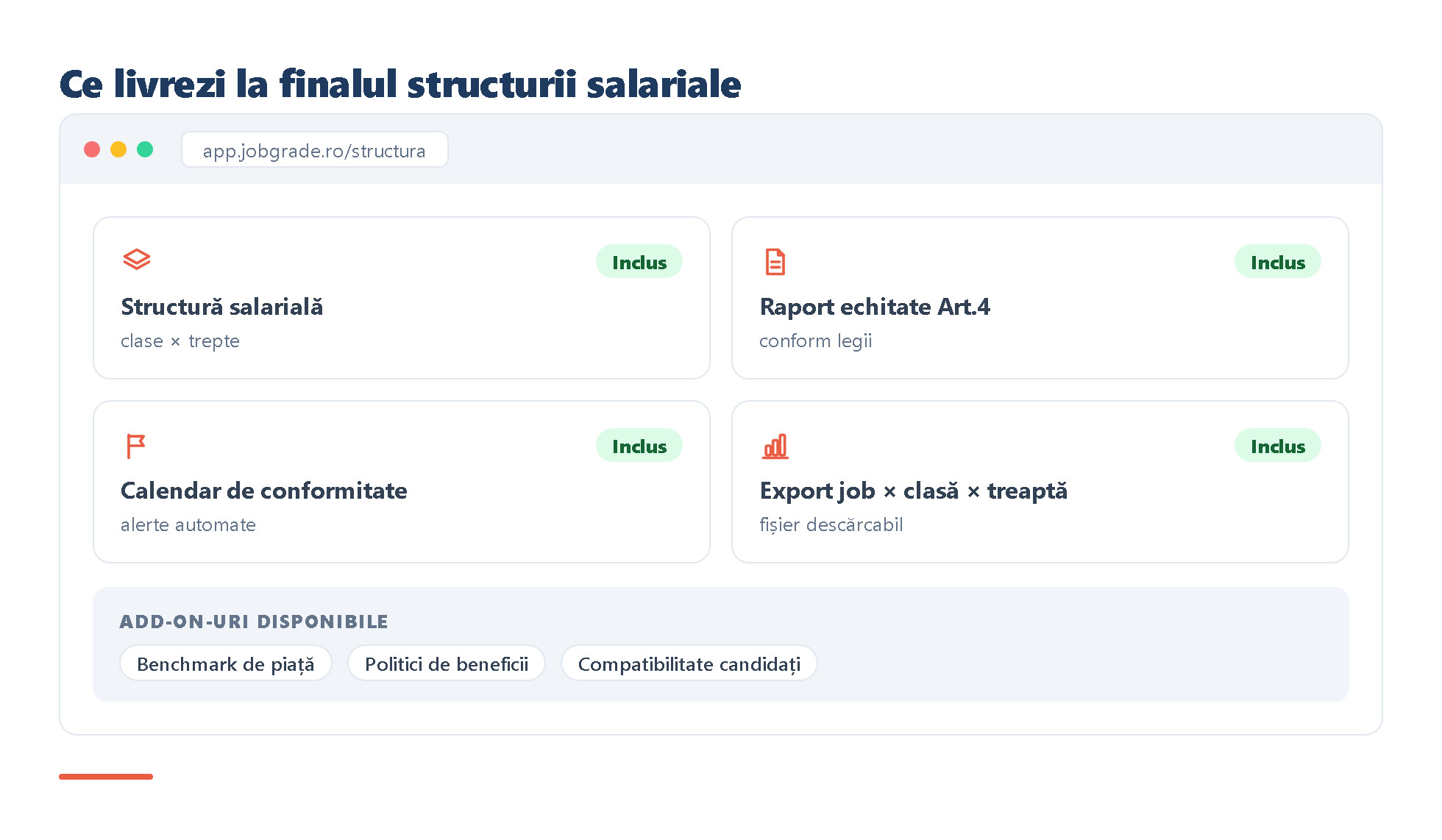
JobGrade takes the confirmed value hierarchy and builds the pay structure: it groups roles into grades based on the distance between scores, derives pay bands from the distance between grades, and produces the complete job × grade × band export.
↘ The pay structure is built and exported — now comes the question the Directive asks explicitly: are jobs of equal value paid equivalently?
Pay equity becomes a number. The number becomes a document.
↪ Odată ce grila e construită, platforma calculează ceea ce Directiva cere să demonstrezi — nu să afirmi.
The pay equity report (Art. 4) shows, for each group of jobs of equal value, whether pay is equivalent — with the gender pay gap calculated by category, not as an organisation-wide average. The basis for compliance is not a declared policy; it is a figure that follows directly from the pay structure.
↘ The documents are produced — but their value rests on the solidity of the foundation they came from.
Grounded in data — not in declaration.
↪ Livrabilele sunt clare — ce le face opozabile e structura din care au ieșit, nu formatul în care sunt prezentate.
Every figure in the pay equity reports is traceable back to the job score, and the score is equally traceable back to the job description. The chain is complete and verifiable — that is what makes the document sustainable under audit or in litigation.
↘ The pay structure is internal, justified, and demonstrable. For the first time, you have a foundation — not an estimate.
The internal structure is sound. The next step sets it against the market.
↪ Ai acum o grilă salarială derivată din valoarea posturilor și documentele care o fac demonstrabilă — asta e temelia pe care orice decizie de compensare se poate construi.
With the pay structure built and pay equity demonstrated, the organisation has an objective foundation for comparing its internal structure against the market — and for making alignment decisions grounded in evidence, not estimation. That is the question the next stage opens.