
- how to stress-test a strategic decision before you commit to it — and see the consequences before they materialise
- what the real organisational climate is telling you beyond the numbers, and why it matters for performance
- how next year's strategic objective translates into a concrete gap calculation against current capability
- how to model restructuring, expansion or shifts in direction on real data — not assumptions
- why your organisational development plan should be derived from your own data — and how it maps the concrete steps of growth
- how JobGrade becomes a continuous modelling partner, not a report provider whose outputs gather dust
- what operational deliverables you receive and how each one opens an additional layer of clarity and control
- how to extend the foundation already built in previous stages with the layer that was missing — conscious modelling of the future
The structure is solid. The future, still untested.
The objective foundation — the hierarchy, the pay structure, your position relative to the market — tells you where you stand today. It does not tell you what happens if you open a new department, restructure a team, or if next year's strategic objective demands more than the current organisation can deliver.
↘ If the foundation is sound and the future remains untested, the question that follows is a precise one: what can you actually model — and what data do you start with?
Climate and coherence — what never shows up in the numbers, yet shapes every performance outcome.
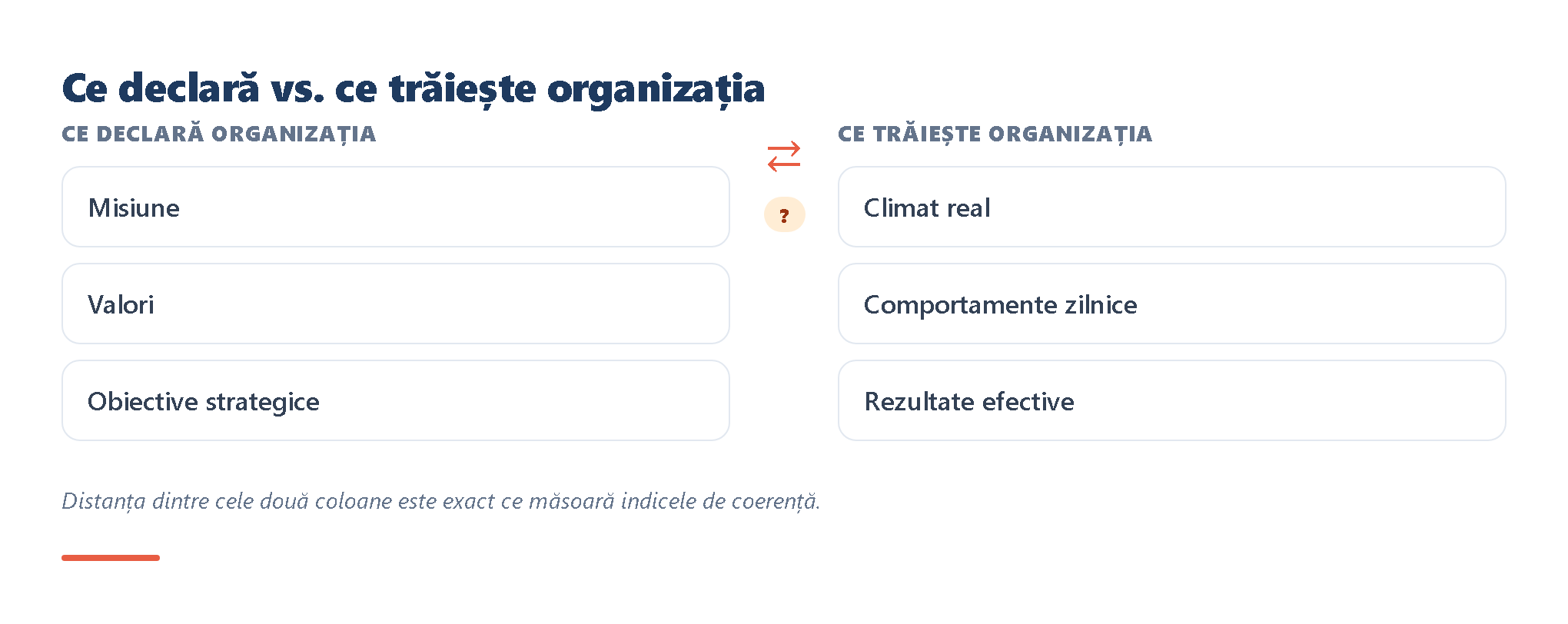
↪ Temelia obiectivă îți spune ce valorează fiecare rol — dar nu îți spune cum se simte munca în organizație și dacă ce afișezi pe perete corespunde cu ce trăiesc oamenii zilnic.
Before you model the future, you need a clear reading of the present: how the organisation actually functions beyond its formal structure — what climate genuinely exists, and how closely what the company says aligns with what it does.
↘ With a clear picture of the present, the question that truly matters comes into focus: is your organisation capable of reaching the objective you have set for it?
The strategic objective enters the analysis — and receives a concrete answer.
↪ Știi cum se simte organizația și unde e fractura dintre declarat și trăit — acum vine întrebarea pe care orice plan strategic o presupune, dar rareori o calculează: structura ta actuală poate să ducă obiectivul pe care ți l-ai propus?
The pressure engine connects the strategic objective to the organisation's structure — its reporting lines, processes, and performance indicators — and to what each person within it is both able and willing to do. The output is not an opinion; it is a calculated gap between where you are and where you need to be.
↘ The gap calculation shows where you are relative to where you intend to be — but before you act, you can test what happens if you choose one direction over another.
You test a direction before you take it — and see the consequences before you produce them.
↪ Decalajul e calculat și direcțiile posibile sunt vizibile — acum vine momentul în care poți testa ce se întâmplă dacă alegi una dintre ele, fără să o aplici pe organizația reală.
The strategic decision simulator lets you test the impact of a decision — restructuring, expansion, a change of direction — on culture, on objectives, and on organisational capacity, before you confirm it. Not a prediction, but a calculation of consequences on real substrate: your organisation's own data, not industry averages.
↘ Scenarios are built and compared — what remains now is what you produce from them: a concrete development plan, not a list of intentions.
From calculation comes a plan. From a plan, a path.
↪ Scenariile au fost testate și decizia are acum un temei calculat — ceea ce urmează e să transformi acel temei într-un plan concret de acțiune, nu într-un document care se prăfuiește.
The organisational development plan — included as standard — is not a list of aspirations. It is derived from the coherence index, the climate report, and the requirements of the objectives engine: each concrete growth step begins with what is fractured today and what tomorrow's objective demands.
↘ A development plan shows the way forward — but the journey only makes sense when the organisation and the platform move through it together, rather than letting the report close and collect dust.
The organisation and the platform grow in step — the process matters more than the deliverable.
↪ Planul de dezvoltare e construit și intervențiile sunt prioritizate — dar valoarea reală nu stă în documentele produse, ci în ce face organizația cu ele în timp.
This phase does not produce a report that sits on a shelf. It produces a process of continuous calibration. The climate is re-measured, coherence is recalibrated, objectives evolve, and the plan is updated. The platform remains active across every cycle — it does not deliver a report and disappear.
What you receive — and what each additional deliverable opens up.
↪ Co-evoluția e procesul — livrabilele incluse sunt punctele de ancorare concrete din care procesul pornește și la care se întoarce la fiecare ciclu.
The deliverables cover measurement, modelling, and planning: the climate report, the cultural profile report, the coherence index, and the organisational development plan. Each is an operational document, not a presentation deck.
↘ The included deliverables give you the foundation — the optional deliverables extend it where your strategic decision calls for it.
The foundation is complete. The next step is yours to open.
↪ Livrabilele sunt clare și procesul e definit — acum rămâne un singur lucru: să începi, cu datele pe care le ai deja.
This stage builds on what you have already established — the hierarchy, the pay structure, the market positioning — and adds the layer that was missing: deliberate modelling of the future. You are not starting over; you are extending a foundation that is already documented and tested.