
- how to detect the gap against the current market before it becomes a retention problem
- how you control the pay structure parameter by parameter and build comparable scenarios on real data
- what grade overlap tells you about the soundness of an adjustment — and why it's the first indicator you look at
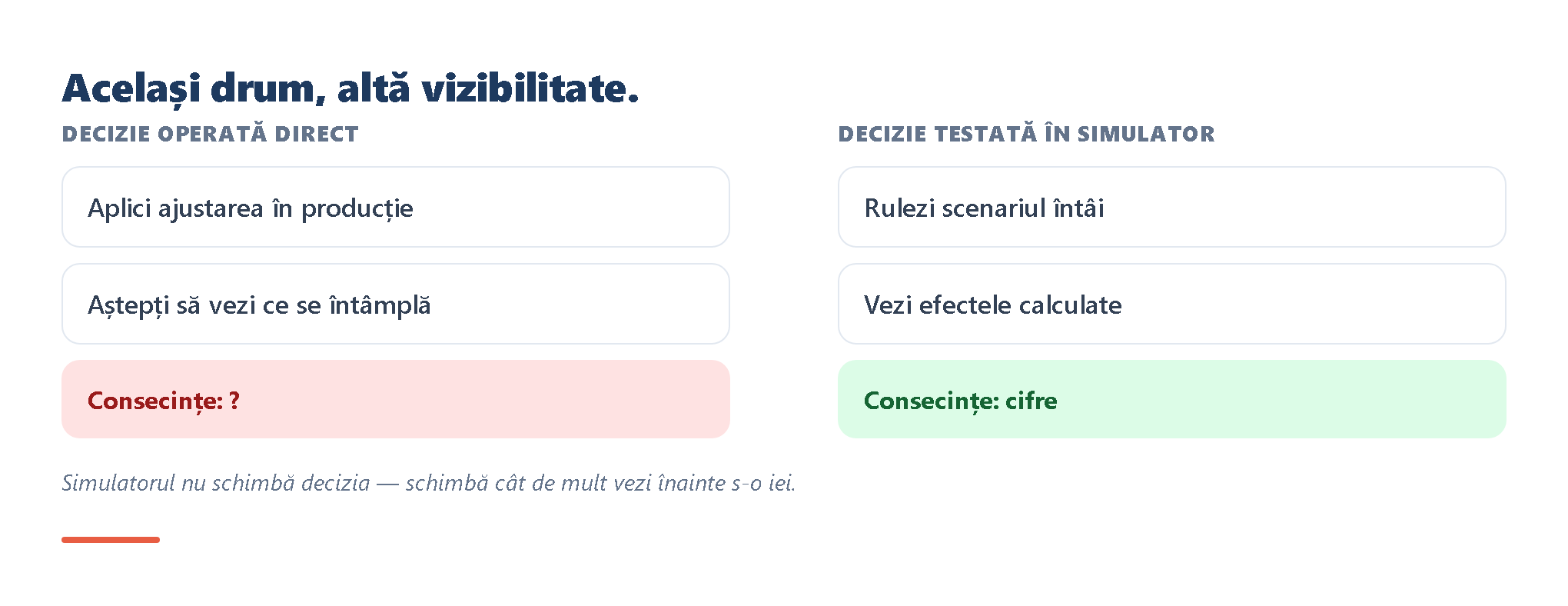
- why your decision becomes data-demonstrable and feeds directly into the pay structure and the compliance log
The market has moved. Your pay structure hasn't.
A documented pay structure tells you where you stand internally — it doesn't tell you whether you've stayed competitive against the current market. The gap exists before you calculate it. The simulator makes it visible before it costs you.
↘ Before you adjust, you need to know exactly which parameters are in your hands — and what you can test without touching the confirmed structure.
Parameters in your hands — adjust the grade, the band, the pay step, or a combination.
↪ Decalajul față de piață e vizibil — acum întrebarea practică e: pe ce anume poți interveni și cât de gdetaliat poți testa, înainte să confirmi ceva.
The simulator puts the complete pay structure in your hands — grades, ranges, pay bands — alongside the market reference, grade by grade. You adjust one parameter or several at once, build parallel scenarios, and compare them against the confirmed structure — not against other scenarios in isolation.
↘ You can build the scenarios — their value lies in how well you interpret the output and in the order you analyse it.
The output shows three things simultaneously. The first thing you look at is the overlap.
↪ Ai rulat scenariul — acum rezultatul pune în față cifre, distribuții și indicatori. Citirea lor urmează o logică specifică poziționării față de piață, diferită de logica ierarhiei interne.
The simulation output shows simultaneously: the adjusted grade's new range against the market reference, the distribution of roles across grades after adjustment, and the effect on the gender pay gap indicator by category. The first thing you look at is the overlap between grades — it tells you whether the adjustment is sound or fragile before you confirm it, and it is the primary check against which all other figures gain meaning.
↘ You have read the output — what matters most now is what you do with it, and what remains on record once you decide.
The confirmed scenario enters the structure. The next step opens from there.
↪ Ai scenariul pe care vrei să îl aplici — confirmarea lui nu produce un document nou, ci actualizează structura existentă cu o urmă clară a ce s-a schimbat, față de ce și pe ce bază.
The confirmed scenario updates the pay structure and the compliance log within the same document — it does not create a parallel record. The decision remains yours; what you gain is that it can be demonstrated with data, not merely asserted.